 Part of: India guides
How do passport rankings count visa-free access?
The Henley Passport Index counts the destinations a passport holder can enter without a visa in advance. The score is the number of destinations accessible through visa-free entry, visa on arrival, or an electronic travel authorisation (eTA), three different things that the ranking adds together into a single number. The rank is the passport's position against all other passports; the score is the raw count. Both matter, and they can move in opposite directions.
How passport rankings work
Henley publishes its index quarterly, using data from IATA's Timatic database, the same database airlines use to check whether a passenger can board. Each destination is scored 1 if the passport holder can enter without a prior visa, and 0 if a visa must be obtained in advance. The index does not measure how easy the trip is, how long you can stay, or whether you need an eTA or a fee on arrival, only whether a visa in advance is required.
The strongest and weakest passports of 2026
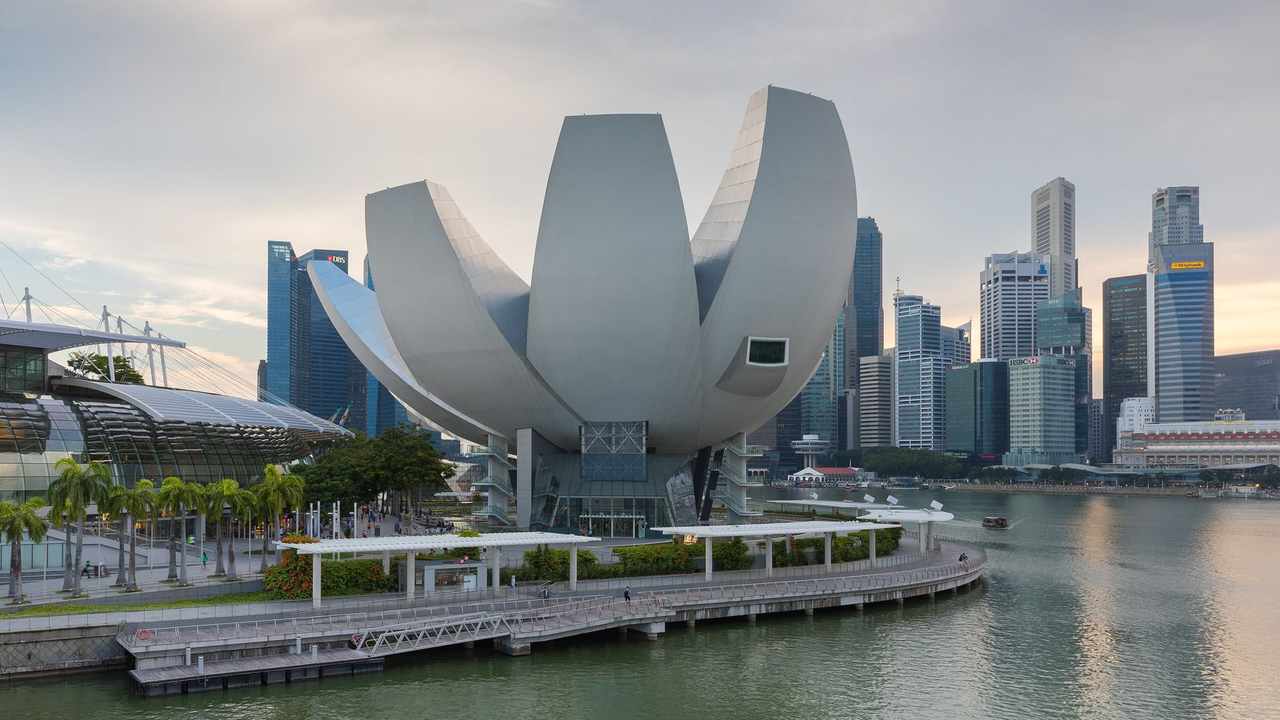
In the October 2026 edition, Singapore ranks 1st with 193 destinations. Japan, South Korea and the UAE share 2nd place with 188 each. At the bottom, Afghanistan is last with 22 destinations. India sits in the middle of the table, 84th, with 55 destinations, tied with Algeria and Mauritania.
Why passports are strong — or weak
Visa policy is reciprocal and risk-based. The factors that decide how many doors a passport opens:
- Overstay and irregular-migration rates, the strongest single predictor. Countries that see high overstay rates from a nationality restrict that nationality.
- Security assessments, document security, border controls and information-sharing with destination countries.
- Readmission cooperation, whether the home country takes back its nationals who are ordered to leave.
- Economic indicators, income levels and the likelihood that a visitor can fund the trip and return.
- Diplomatic reciprocity, countries open their doors to passports whose countries open theirs. India grants e-visas widely, which helps, but full visa-free reciprocity is rarer.
- Document fraud history, the integrity of the passport itself and of the documents used to obtain it.
Case study: a mid-ranked passport — India
India's passport is a classic mid-ranked case: a huge, growing economy whose citizens travel in enormous numbers, but whose overstay risk and visa-refusal rates keep many doors closed. The 55-destination score is built mostly on South and Southeast Asia, the Caribbean and small island states, not on Europe or North America, where every Indian traveller still needs a visa in advance. The practical consequence is that an Indian passport holder's most useful travel document is not the passport's rank but the visas already in it: a valid US, UK or Schengen visa opens doors (including visa-free entry to several countries) that the Indian passport alone does not.
Visa-free, visa-on-arrival, eTA: what a score is actually made of
The three kinds of "accessible":
- Visa-free, walk in with your passport. No fee, no form, no wait. The strongest form of access.
- Visa on arrival; a visa issued at the airport, usually for a fee, sometimes with queues and paperwork. It counts in the score, but the experience is very different from visa-free.
- eTA; an electronic authorisation applied for online before travel. Quick, but it is still a permission step.
Why the mix skews by rank: top-ranked passports are mostly visa-free; mid-ranked passports like India's lean heavily on visa-on-arrival. India's 55 breaks down as 25 visa-free destinations and 26 visa-on-arrival destinations in the lists below, with the remaining 4 counted as eTA destinations; the Henley score counts all three together, so the lists below add to 51 while the score is 55.
The visa-free list (25 destinations)
| Region | Destinations |
|---|---|
| Asia | Bhutan, Kazakhstan, Macao, Malaysia, Nepal, Thailand |
| Africa | Angola, Mauritius, Rwanda, Senegal |
| Caribbean & the Americas | Barbados, British Virgin Islands, Dominica, Grenada, Haiti, Jamaica, Montserrat, St Vincent and the Grenadines, Trinidad and Tobago |
| Oceania | Cook Islands, Fiji, Kiribati, Micronesia, Niue, Vanuatu |
The visa-on-arrival list (26 destinations)
Burundi, Cambodia, Cape Verde, Djibouti, Ethiopia, Guinea-Bissau, Indonesia, Jordan, Laos, Madagascar, Maldives, Marshall Islands, Mongolia, Mozambique, Palau, Philippines, Qatar, Samoa, Sierra Leone, Somalia, Sri Lanka, St Lucia, Tanzania, Timor-Leste, Tuvalu, Zimbabwe.
Always confirm the current rules before travel. Visa-on-arrival availability, fees and stay lengths change, and some destinations on this list also offer an e-visa that is safer to arrange in advance.
How a score moves from one edition to the next
India's score fell between editions while its rank rose: in October 2025 India was 85th with 57 destinations; in October 2026 it is 84th with 55. The rank improved because other passports fell further, not because India's access grew. Two changes drove the score down: Iran suspended visa-free entry for Indian citizens, and Bolivia replaced visa-on-arrival with an e-visa, which no longer counts the same way. A single policy change in one destination can move a score by one, and a passport's rank is decided as much by what happens to other passports as by its own changes.
Regional comparison: India in context
India's 55 destinations sit well above Pakistan (103rd, 29 destinations) and Bangladesh, and well below the East Asian leaders (Japan and South Korea, 188 each). The gap is not about the size of the economy; it is about the six factors above, and about reciprocity: the countries that open their doors widest to Indian travellers are mostly the ones India itself opens its doors to.
What would actually move India's passport
Three things, in order of impact: lower overstay and refusal rates in the big destination countries, which is a matter of traveller behaviour over years; more visa-waiver agreements, which follow trade and diplomatic ties; and stronger document security and readmission cooperation, which are government-to-government work. None of them moves in a single quarter. Passport power is a lagging indicator of all three.
What a ranking means for your own travel
For an individual traveller, the ranking is a starting point, not a travel plan. Check the entry rules for your specific destination and your specific passport before booking; the lists above are the October 2026 picture, and rules change. And remember that a valid visa from a major destination (the US, the UK, Schengen) often unlocks visa-free entry to additional countries that the Indian passport alone does not open.
Sources
- Henley Passport Index, October 2026 edition (published 9 October 2026): Singapore 1st (193), Japan/South Korea/UAE joint 2nd (188), India 84th (55), Afghanistan last (22)
- IATA Timatic, the entry-requirements database behind the Henley scores
- Times Now, timesnownews.com: the Indian visa-free and visa-on-arrival lists for the October 2026 edition, checked November 2026
- News18, news18.com: the Indian visa-free and visa-on-arrival lists for the October 2026 edition, checked November 2026
Ranking figures checked against the Henley Passport Index, October 2026 edition, on 15 November 2026. Entry rules change. Confirm the current requirements for your destination before booking.