 Part of: Croatia guides
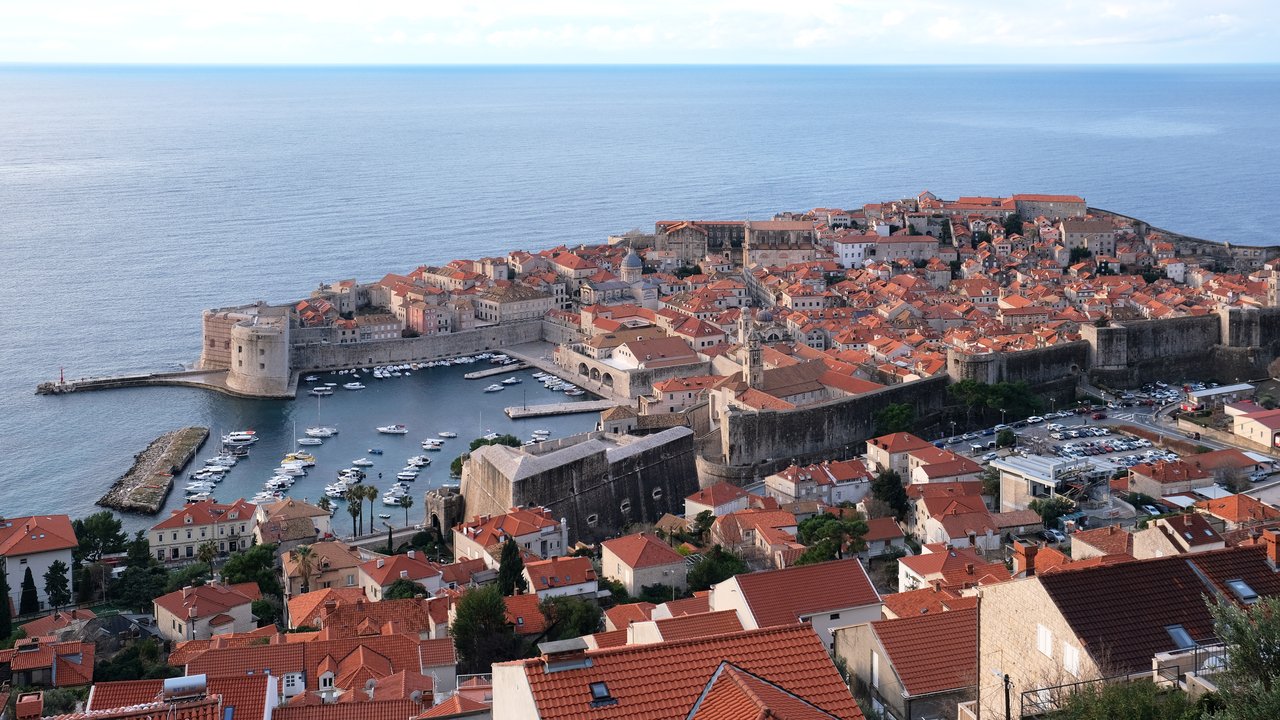
If you work remotely and want to live in Croatia for a year or more, the first question is a single number: how much you must earn each month to qualify. Get it wrong and the rest of the application does not matter. The threshold moves every year, and many guides still show last year’s figure.
Fees and thresholds change; verify the current figure on Croatia’s official Ministry of the Interior digital nomad page before you apply.
The direct answer
Croatia’s digital nomad visa requires a monthly income of €3,622.50. That figure is not arbitrary. Croatia sets it at 2.5 times the previous year’s average monthly net salary, as published by the Croatian Bureau of Statistics, so it is recalculated annually. That explains why older guides disagree: one guide from a previous cycle shows €2,540, a later guide shows €3,295, and current guides show €3,622.50. If you budget from an older article, you are likely to fall short.
There is also a savings route. Current guides describe savings of €43,470 for a 12-month stay, or €65,205 for the full 18-month stay, as the alternative to showing monthly income. Acceptable evidence, per the Ministry of the Interior (MUP) digital nomad page, is a bank statement showing the total amount for the intended stay, or a bank statement showing proof of regular income to the monthly amount, or payslips for at least six months. Documents must be clearly labelled PDFs (maximum 2 MB), in Croatian or English (via an authorised translator if needed), with the currency clearly stated.
If family members join you, the requirement rises. Guides describe an uplift of 10% of the average monthly net salary per additional family member, roughly €145 per month per person on current figures. Budget for that uplift from the start, not after you have signed a lease.
Who can apply
This programme is for people who work remotely for employers or clients outside Croatia. That condition is central. If you are employed, your employer must not be registered in Croatia. If you are self-employed or a freelancer, your clients must be outside Croatia. It is a temporary residence permit for remote work, not a route to take a local Croatian job.
The permit is open to non-EU, non-EEA and non-Swiss citizens who meet the remote-work and income conditions. EU citizens do not need this permit to live in Croatia, so if you hold an EU passport, this guide is not your route.
You will also need the standard documents: a valid passport, proof of accommodation in Croatia, health insurance covering Croatian territory, a criminal background check, and proof of remote work, such as an employment contract or client agreements. Current guides describe the background check as needing to be recent, commonly no older than six months.
How long you can stay, and what the permit allows
Croatia’s digital nomad visa now allows a stay of up to 18 months on a single permit, extended from the original shorter period in March 2025. If a permit is granted for less than 18 months, an extension application must be filed no later than 60 days before expiry, and the extension is for a maximum of 6 months. A new digital-nomad application can only be submitted 6 months after the previous stay expires. That 6-month gap matters: this permit is not described in the sources consulted as a direct path to permanent residence, because the gap breaks the unbroken residence period permanent residence normally requires.
While your permit is valid, you can travel within the Schengen Area, since Croatia joined Schengen in 2023. That is a real benefit for weekend trips, but it does not extend your Croatian permit or change its expiry date. Keep the two ideas separate: Schengen travel is a freedom attached to a valid permit, not extra residence time.
One further benefit is widely reported and worth understanding correctly. Foreign employment income from a non-Croatian employer is described as exempt from Croatian income tax during your stay under this programme. That exemption is a feature of this specific permit category, not a general rule for everyone living in Croatia. Tax rules in your home country may still apply, and this guide is not tax advice.
How to apply, in outline
You can apply online or in person. If you apply online, current guides say the application is evaluated by the police station closest to where you will be staying in Croatia. If you are from a country that does not need a tourist visa in advance to enter Croatia, you may also be able to apply from a Croatian embassy or consulate abroad, or from the nearest police station to your current address in Croatia. If you do need a visa to enter Croatia, you will generally need a category D visa first, with the residence permit card issued after arrival. The biometric card fee quoted in the fee breakdown below is the fee for that biometric residence card.
The fee depends on where you apply, and there is no single published fee. Guides quoting one figure are usually quoting one route’s components. Applying in Croatia at a police station (paid after grant): €46.45 temporary stay + €9.29 admin fee + €31.85 biometric card = €87.59 (or €115.47 with the €59.73 accelerated card). Applying at a diplomatic mission or consulate (paid on applying): €55.74 temporary stay plus either the €93.00 long-term D visa (€148.74 total) or the €41.14 biometric card (€96.88 total). A figure around €189 sometimes seen in guides adds all three consulate components together (€55.74 + €93.00 + €41.14 = €189.88), which the MUP page does not present as one payable total. Do not budget on it. Confirm the components for your route on the MUP page before you pay.
The MUP page states no processing time. Apply well before your intended move date.
Common mistakes
The most common mistake is using last year’s income figure. Because the threshold is recalculated from the prior year’s average wage, a guide that was correct twelve months ago can now leave you hundreds of euros short each month. Always check the current year’s figure, not the figure in the first search result.
The second mistake is assuming local work is allowed. It is not under this permit. Taking a job with a Croatian company while holding a digital nomad permit would put your status at risk.
The third mistake is treating approval as routine. One guide reports that in 2024 only 342 of 824 applications were approved, about 41.5%. Prepare complete, consistent evidence, matching income proof, accommodation, insurance, and background check, rather than assuming the income threshold alone is enough.
Is Croatia the right choice?
Croatia suits a remote worker who earns comfortably above the threshold, wants an EU base with Schengen travel, and values the tax exemption for the permit period. It suits that worker less well if income sits close to the threshold, or if they want a direct path to permanent residence, which this permit is not designed to provide. Start from the current official figure, not a blog post’s headline.
Year table: how the income threshold moved, and what it means for next year
The threshold is a formula, not a fixed price: 2.5 times the previous year’s average monthly net salary, as published by the Croatian Bureau of Statistics. That is why older guides disagree with each other while each having been right in its own year. All figures below repeat this guide’s own sections.
| Year / cycle in this guide | Monthly income requirement | Savings alternative in this guide | What changed |
|---|---|---|---|
| Earlier cycle (guide figure quoted in this guide) | €2,540 | Not stated for that cycle in this guide | Superseded — do not budget from it |
| Later cycle (guide figure quoted in this guide) | €3,295 | Not stated for that cycle in this guide | Superseded — do not budget from it |
| 2026 (current, in this guide) | €3,622.50 (= 2.5 × the 2025 average net salary) | €43,470 for 12 months; €65,205 for 18 months | Current figure; family uplift 10% of the average monthly net salary per additional family member, roughly €145/month per person |
| Next cycle (not yet published at this guide’s check) | Recalculated from the next published average net salary | Recalculated on the same formula | Budget with headroom above €3,622.50 if you will apply next year; check the MUP page, not a blog headline |
Formula, worked: €3,622.50 ÷ 2.5 = €1,449 average monthly net salary (2025). Family arithmetic on the current figure: one additional family member adds roughly €145/month, so a couple’s threshold is roughly €3,622.50 + €145 = ≈€3,767.50/month, and the 12-month savings equivalent for a couple is roughly €43,470 + (12 × €145) = ≈€45,210. Confirm the exact uplift on the MUP page, since the uplift is defined as 10% of the average salary, not 10% of the threshold. Reapplication wait, restated because it decides planning: a new digital-nomad application can only be submitted 6 months after the previous stay expires, and if a permit is granted for less than 18 months, an extension must be filed no later than 60 days before expiry for a maximum of 6 further months. Because of that 6-month gap, this permit is not described in the sources consulted as a direct path to permanent residence. The gap breaks the unbroken residence period permanent residence normally requires. Residency counting note: do not count the 6-month gap as residence, and do not assume Schengen travel on a valid permit extends the Croatian permit; it does not.
Update, 25 October 2026: year table, formula arithmetic and residency-counting note added, using only figures already stated in this guide.
To set Croatia against other nomad routes, see Digital Nomad Visas Compared 2026: Income, Fees & Stay Length and Digital Nomad Visa Income Requirements Compared 2026: Every Threshold in One Table.
Sources (checked October 2026)
- Calculation, €3,622.50, savings, uplift, 18 months, tax exemption: https://citizenremote.com/visas/croatia-digital-nomad-visa/?ref=remotelyserious.com ; https://www.escapeartist.com/blog/digital-nomad-visas-compared/
- 18-month extension, prior €3,295 figure, routes: https://globetrender.com/2025/09/01/croatia-extends-digital-nomad-visa-18-months/
- Prior €2,540 figure, non-Croatian employer rule: https://www.grenvia.com/easiest-digital-nomad-visas-low-income/
- Approval rate (342/824 in 2024), D-visa note: https://iworld.com/en/blog/croatia-digital-nomad-visa
- Background (since January 2021): https://www.afar.com/magazine/european-countries-where-you-can-be-a-digital-nomad
- Ministry of the Interior (Croatia), temporary stay of digital nomads (fees by route, income and savings requirements, 18-month grant and extension/gap rules): https://mup.gov.hr/aliens-281621/stay-and-work/temporary-stay-of-digital-nomads/286833?big=1
This guide is general information only, not legal or immigration advice. Re-check the official figure before you apply.