Do I need a visa for Nigeria?
Yes, nearly every visitor needs an e-Visa applied for online before travel, through the Nigeria Immigration Service portal at portal.immigration.gov.ng. Visa on arrival was abolished on 1 May 2025, when the e-Visa replaced it, and a separate Landing and Exit Card became mandatory for all passengers. The e-Visa fee varies by nationality; the NIS 2026 fee schedule lists $160 for US citizens. Check the official source before travel for your exact figure. Full steps are in our Nigeria visa guide.
Nigeria at a Glance
| Fact | Detail |
|---|---|
| Official name | Federal Republic of Nigeria |
| Capital | Abuja |
| Largest city | Lagos (about 15.9 million) |
| Population | About 242.7 million (2026 estimate) — the most populous country in Africa, sixth in the world |
| Total area | 923,769 km² |
| States | 36 states and the Federal Capital Territory |
| Official language | English |
| Currency | Nigerian naira (NGN, ₦) |
| Government | Federal republic |
| Time zone | WAT (UTC+1), no daylight saving |
| Calling code | +234 |
| Driving side | Right |
From the Sahel to the Gulf of Guinea
Nigeria runs from the Sahel in the north to the Gulf of Guinea in the south, between Benin and Cameroon. The north is savanna and, at the edge, semi-desert; the middle belt is farmland; the south is rainforest, mangrove creeks and the Niger Delta; the coast is the Atlantic. The country is a federal republic of 36 states plus the Federal Capital Territory, where the capital, Abuja, sits, a planned city built in the centre of the country, while Lagos, the old capital, kept the commerce.
Nigeria is also one of the most linguistically diverse countries on Earth: English is the official language, but hundreds of languages are spoken, with Hausa, Yoruba and Igbo the largest. That diversity is the point of the place, and the reason a single "Nigerian culture" section would be a fiction.
Oil, Nollywood and the Continent’s Biggest Market
Oil and gas dominate exports and government revenue, but the economy most visitors meet is bigger than oil: agriculture, trade, a huge informal market economy, Nollywood (one of the world's largest film industries by output), Afrobeats (one of the world's biggest music exports), and a fast-growing tech scene in Lagos. With more than 242 million people, Nigeria is Africa's largest market by population, and its most volatile currency: the naira moves fast, so treat every US-dollar figure in this guide as a moving target and check the live rate before you travel.
Lagos Runs the Country, Abuja Runs the Government
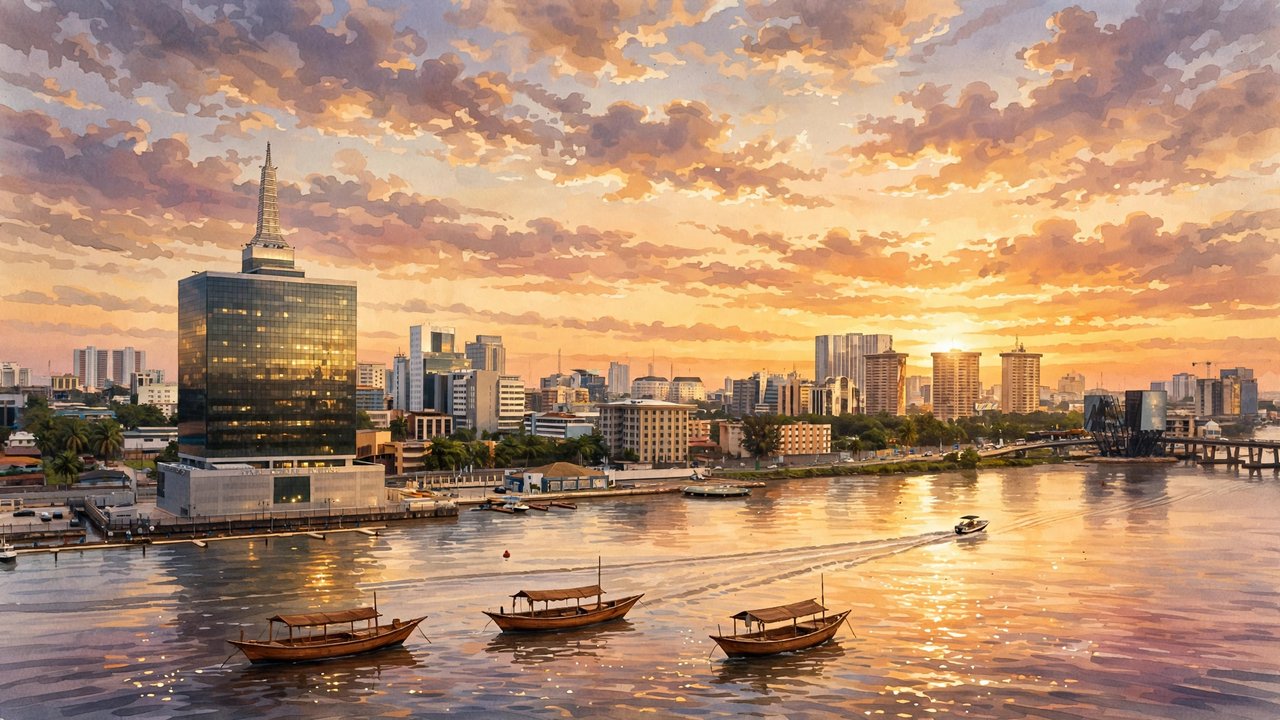
Lagos is the commercial capital: Victoria Island and Ikoyi for business hotels and restaurants, Lekki for the new middle class, the Mainland (Yaba, Surulere, Ikeja) for the city's real life and lower prices. Abuja is the political capital, planned, green, slower, and the base for government business. Kano anchors the north; Ibadan and Port Harcourt anchor the south-west and the Delta. Most first trips stay in Lagos and Abuja; the north and the Delta need local knowledge and a different risk appetite.
What a Week Costs: Lagos vs Abuja
Budget travellers spend about $24 to 58 a day and mid-range travellers about $60 to 162 a day, before international flights and the visa. In Lagos, budget guesthouses run about ₦25,000 to 50,000 a night ($17 to 33) and mid-range hotels ₦70,000 to 150,000 ($46 to 100). A plate of jollof with chicken is about ₦1,500 to 3,000 at a buka (local canteen) and ₦4,500 to 8,000 at a mid-range restaurant. Cross-Lagos app rides run about ₦3,000 to 10,000 depending on traffic. Lagos is the most expensive city in the country; Abuja is cheaper. The full breakdown is in our Nigeria trip cost guide.
Work out what your trip costs with the Trip-Cost Calculator: enter your own daily spending, flights, visa and insurance figures and it totals them per person and for the whole group.
500 Languages, One English, and the Jollof Debate
English works everywhere official Nigeria happens; Pidgin works everywhere else, and learning a few phrases earns more goodwill than any guidebook tip. Food is the shared language: jollof rice (Nigeria's side of the great West African jollof war), suya, amala with stew, pepper soup. Eat at a buka for the real thing, ₦1,500 to 3,000 a plate, and save the hotel restaurants for the days you need air conditioning and Wi-Fi. Dress is smart-casual in Lagos business circles and modest elsewhere; ask before photographing people and markets.
Lagos or Abuja First?
First trip: Lagos, for the energy, the food, the music and the business of the place, stay on the Island side (Victoria Island, Ikoyi or Lekki) for safety and walkability, and budget for app rides, because the city is not walkable at scale. Abuja suits a second trip or a government-focused one: calmer, greener, and the base for the middle belt. Either way, build in slack. Traffic in Lagos is a planning factor, not an inconvenience, and domestic flights are the sane way to cover distance.
Best Time to Visit Nigeria
The best time to visit Nigeria is the dry season, roughly November to March, when rainfall is at its lowest. The wet season runs approximately April to October. The dry season also brings the harmattan, dry winds from the Sahara that typically affect much of the country during the dry season.
eVisa First: Entry in One Paragraph
Apply for the e-Visa online at portal.immigration.gov.ng before you travel, upload your passport bio page, photo, return ticket and hotel booking or invitation, and pay by card. The standard tourism e-Visa is single entry with a 30-day maximum stay, and approval takes about 3 to 5 business days. Complete the mandatory Landing and Exit Card as well; it is not a visa. Full steps and fees are in the Nigeria visa guide.
Pros and Cons
The case for
- Africa's biggest market and its most dynamic cultural scene, music, film, food, fashion, in one country.
- Street food and bukas are genuinely cheap: $1 to 2 a plate.
- English is the official language, so independent travel is easier than in much of the region.
The case against
- The e-Visa is expensive by African standards and the fee varies by nationality.
- Lagos is pricey at the top end, and traffic eats whole days.
- The naira is volatile, dollar budgets age fast, and cash plus bank ATMs beat card-only plans.
Sources
- Nigeria Immigration Service, official e-Visa portal (home page, crawled 3 November 2026): portal.immigration.gov.ng, checked 13 November 2026
- Encyclopaedia Britannica, Nigeria country facts (population, area, capital, language): www.britannica.com, checked 13 November 2026
- World Factbook 2026, Nigeria (population, calling code, currency, Lagos population): www.worldfactbooks.com, checked 13 November 2026
- LagosMove, Nigeria visa for US citizens 2026 (NIS 2026 fee schedule, $160; Landing and Exit Card): lagosmove.com.ng, checked 13 November 2026
- ScalioTrips, Nigeria travel guide 2026 (Lagos prices, daily budgets, transport): www.scalio.blog, checked 13 November 2026
- Nigeria High Commission, Canberra, "About Nigeria" (climate: dry season approximately November to March; wet season approximately April to October; harmattan during the dry season): nhcca.vedatechnology.ng, checked November 2026
Facts checked: 13 November 2026