Do I need a visa for Peru?
Most visitors do not. Citizens of the US, UK, Canada, Australia, New Zealand, every EU country, Japan, South Korea, Mexico and most of Latin America enter visa-free for up to 90 days (and up to 183 days in a 365-day period for some nationalities), free of charge. There is no passport stamp. The digital TAM Virtual entry card is downloaded free from Migraciones. Full steps are in our Peru visa guide.
Peru at a Glance
| Fact | Detail |
|---|---|
| Official name | Republic of Peru |
| Capital and largest city | Lima (11.2 million in the metropolitan area, 2023) |
| Population | 34,157,732 (2025 census); about 34.7 million estimated in 2026 |
| Total area | 1,285,216 km² — the third-largest country in South America |
| Departments | 24 departments plus the constitutional province of Callao and Lima province |
| Official languages | Spanish (82.9%), Quechua (13.6%), Aymara (1.6%) |
| Currency | Peruvian sol (PEN, S/) |
| Government | Presidential republic |
| Time zone | PET (UTC−5), no daylight saving |
| Calling code | +51 |
| Driving side | Right |
Three Countries in One: Coast, Sierra and Selva
Peru is three countries stacked side by side. The Costa is the narrow coastal desert belt where about a third of the population lives, Lima, Arequipa and the beaches. The Sierra is the Andean highlands, where about half the population lives at altitude, and where Cusco sits at 3,400 metres. The Selva is the eastern Amazon lowland jungle, where the remaining sixth lives in some of the most biodiverse land on Earth. Nevado Huascarán (6,746 metres) is the country's highest peak and the highest mountain in the tropics, and Lake Titicaca, the world's highest navigable lake, is shared with Bolivia. The geography is the trip: the coast is a desert, the Andes are a trek, and the jungle is a world apart.
Copper, Gold and Fishing: What the Economy Runs On
Peru is an export economy built on what it digs and catches: copper, silver, gold, petroleum, timber, fish, iron ore and natural gas, with hydropower from the Andes. It is one of the world's great mining countries, copper and gold anchor the exports, and a leading fishing nation. The sol (PEN) has held steady against the dollar in recent years, about S/3.70 to 3.80 per dollar in mid-2026, which makes Peru one of the most predictable South American currencies to budget in. Nominal GDP is about $284 billion.
Lima, Cusco and Arequipa: The Three Cities
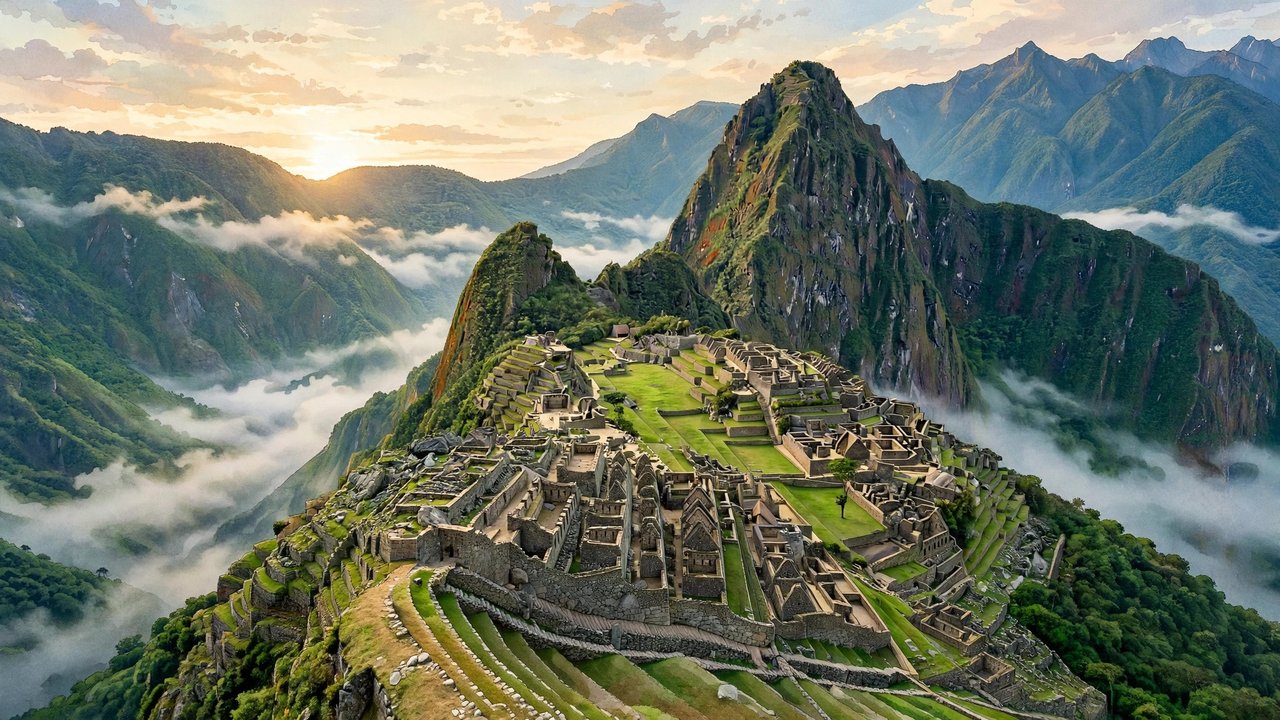
Lima is the capital and the entry point: 11.2 million people, a desert city on the Pacific, with the best food scene in Latin America and the colonial centre of the old Viceroyalty. Cusco is the gateway to Machu Picchu and the Inca world, sitting at 3,400 metres; the altitude, not the distance, is the first challenge. Arequipa (959,000 people) is the white city, built from volcanic sillar stone at the foot of El Misti, and the base for the Colca Canyon. Trujillo (904,000) anchors the north coast and the pre-Inca ruins of Chan Chan.
What a Week Costs: Lima vs Cusco
Budget travellers spend about $31 to 63 a day and mid-range travellers about $80 to 155 a day, excluding international flights, and the Machu Picchu day is the exception that proves the rule: it adds about $155 to 279 on top of a normal day. A hostel dorm runs S/30 to 65 ($8 to 18) a night, a 3-star hotel S/200 to 380 ($54 to 103), and a menú del día at a market restaurant S/12 to 20 ($3 to 5). The full breakdown is in our Peru trip cost guide.
Work out what your trip costs with the Trip-Cost Calculator: enter your own daily spending, flights, visa and insurance figures and it totals them per person and for the whole group.
Ceviche, Quinoa and the Markets of Lima
Peruvian food is the country's soft power. Ceviche is the national dish, quinoa and potatoes are Andean staples, Peru grows thousands of potato varieties, and the markets of Lima are where the food scene starts: a market soup costs S/8 and a menú del día S/12 to 20. Food is where Peru feels cheap even when the trains do not: a day of eating can hold to $8 to 15 on a budget, and a mid-range dinner in Miraflores or Cusco runs S/30 to 55 ($8 to 15). The altitude note matters too: coca tea is the local remedy for the first day at 3,400 metres.
May to October: The Dry Season in the Andes
The Andes have two seasons, and the dry season (May–October) is the one to plan around: clear skies, dry trails and cold nights. The rainy season (November–March) brings afternoon downpours and mud on the trails. The Inca Trail closes in February, but it is also when the Sacred Valley is green and the crowds thin. The coast is the mirror image: the Lima winter (June–September) is grey and overcast, and the summer (December–March) is warm and sunny. Machu Picchu is open year-round, but the best balance of weather and crowds is May, June, September and October.
Visa-Free for 90 Days: Entry in One Paragraph
Citizens of the US, UK, Canada, Australia, New Zealand, every EU country, Japan, South Korea and most of Latin America enter visa-free for up to 90 days (and up to 183 days in a 365-day period for some nationalities), free of charge. There is no passport stamp. The digital TAM Virtual entry card is downloaded free from Migraciones. Whether the 90 days can be extended is disputed between official sources, so confirm with Migraciones before your stay expires. Full steps are in the Peru visa guide.
Pros and Cons
The case for
- Machu Picchu is one of the seven wonders of the modern world, and the Andes hold the best trekking in the Americas.
- Budget travellers spend $31 to 63 a day, and a market lunch costs $3 to 5.
- 90 days visa-free for most passports, free of charge, with a stable sol.
The case against
- Cusco sits at 3,400 metres, altitude sickness is a real first-day cost, and acclimatisation is not optional.
- Machu Picchu adds $155 to 279 to a single day, and tickets and trains must be booked well ahead.
- The extension rules are disputed between official sources. Do not assume a longer stay is possible.
Sources
- Encyclopaedia Britannica, Peru (34,666,000 est. 2026; Lima 11.2m; Quechua 13.6%; Nevado Huascaran 6,746m): www.britannica.com, checked 13 November 2026
- Wikipedia, Peru (2025 census 34,157,732; area 1,285,216 km²; Arequipa 959k; Trujillo 904k): en.wikipedia.org, checked 13 November 2026
- Open FactBook, Peru (copper, silver, gold, petroleum, timber, fish, iron ore, hydropower, natural gas): openfactbook.org, checked 13 November 2026
- Peru Spirit, Peru Trip Cost Guide 2026 (daily $40 to 55 / $90 to 140; S/3.70 per $1; Machu Picchu +$200 to 320): www.peru-spirit.com, checked 13 November 2026
- The Only Peru Guide, How Much Money Do You Need for Peru (hostel S/30 to 65; 3-star S/200 to 380; menu del dia S/12 to 20): www.theonlyperuguide.com, checked 13 November 2026
- LatAm Travellers, Peru Trip Cost 2026 (backpacker $55 to 110/day; mid $130 to 220; Machu Picchu day $200 to 320): latamtravellers.com, checked 13 November 2026
- Travel Guides Finder, Peru Travel Guide 2026 (May–Oct dry season; Cusco 3,400m; Inca Trail closed Feb): www.travelguidesfinder.com, checked 13 November 2026
Facts checked: 13 November 2026. The sol is stable, but recheck the live rate before you travel.